RTF
Regenerative Textile Fiber:
The fiber’s density and stability allow the material to maintain its geometry during handling, machining, and installation. This increased consistency facilitates the manufacture of precise parts and reduces loose fibers, irregularities, and deformations in the final product.
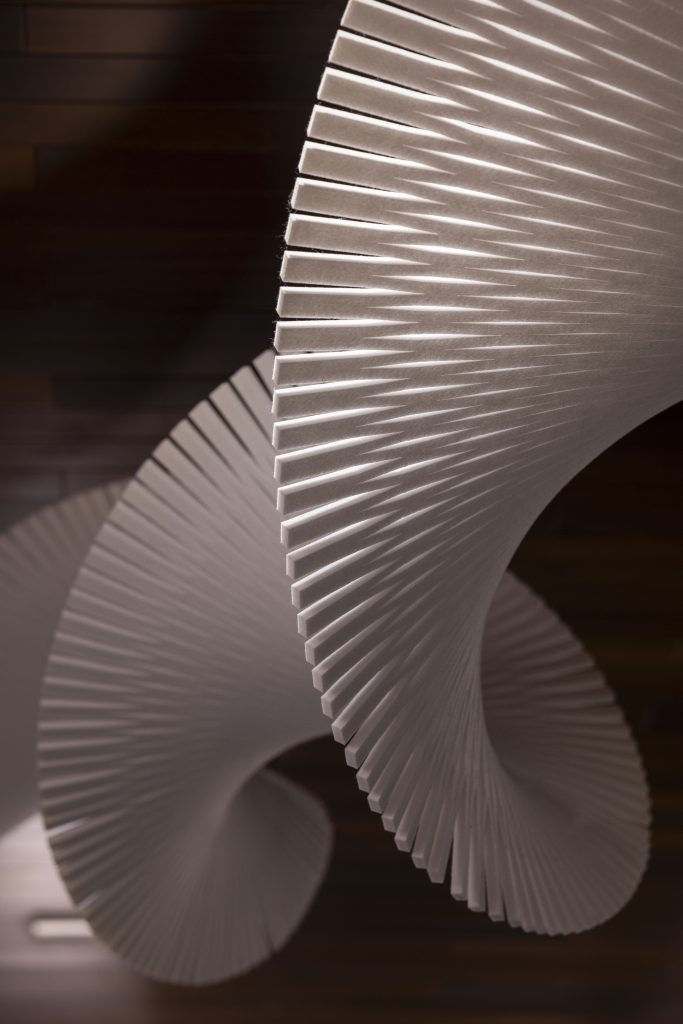
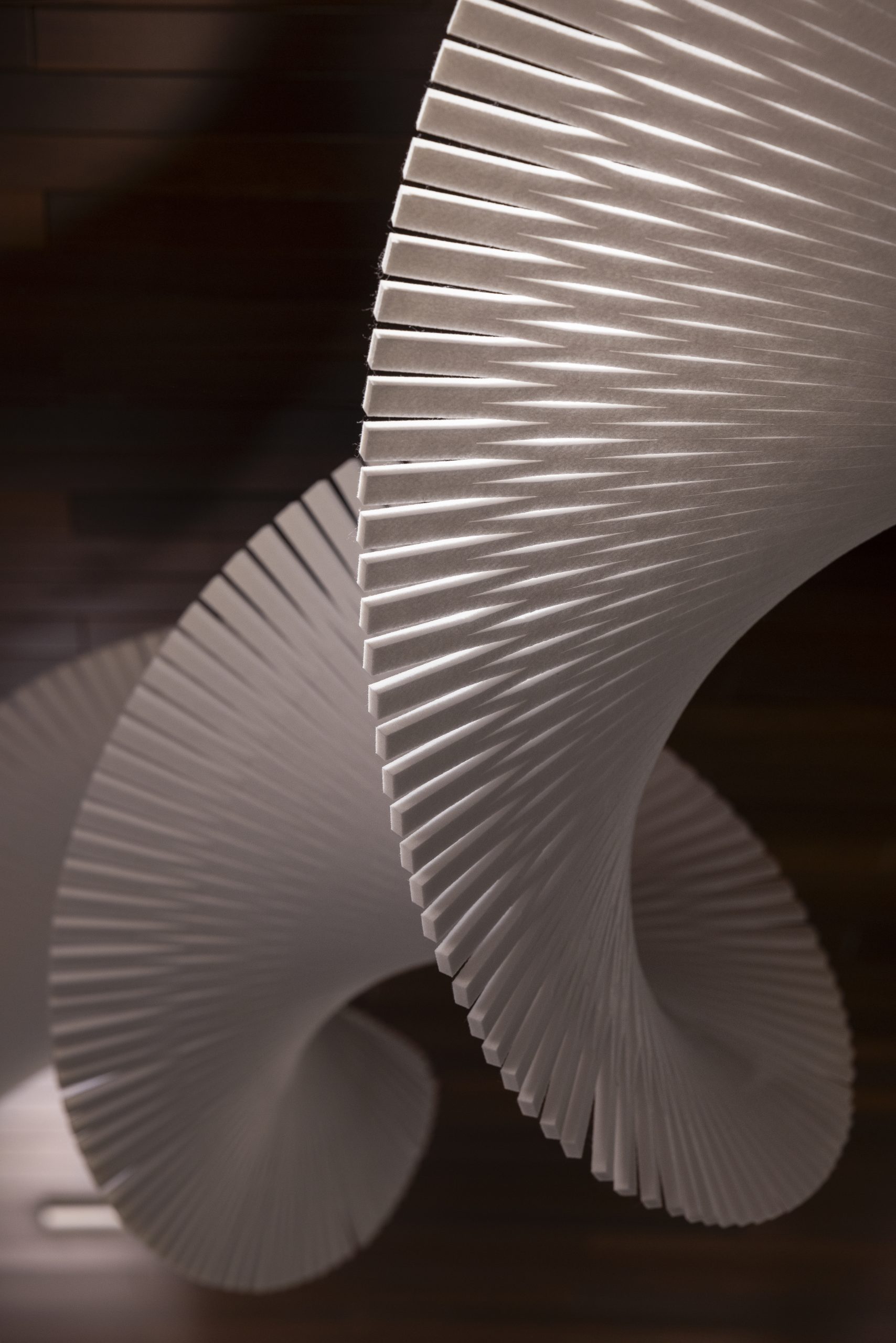
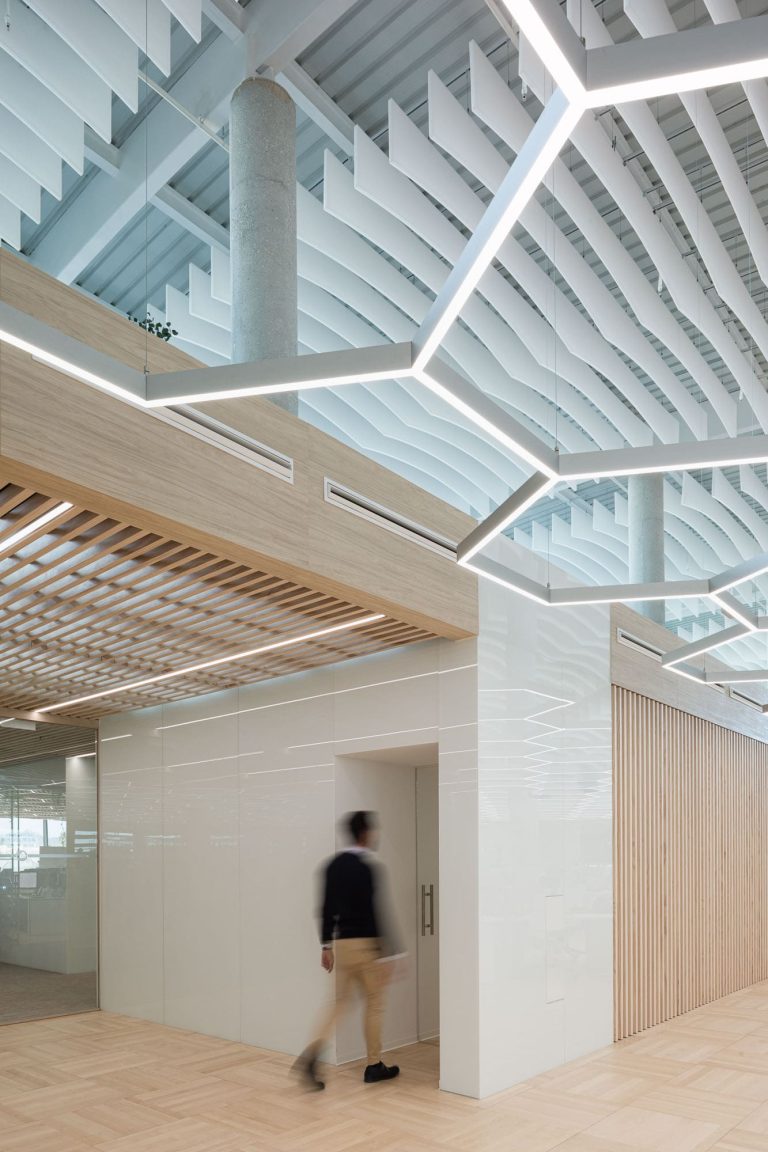
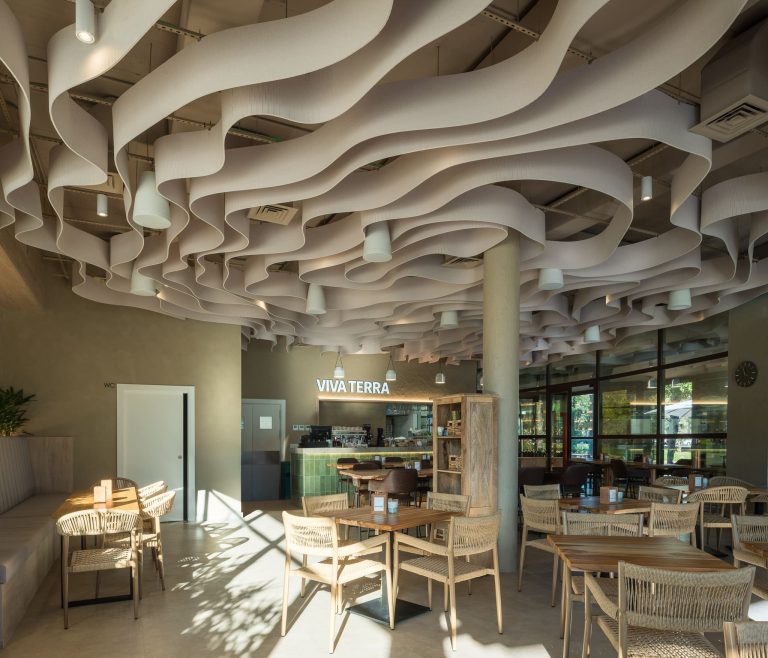
Acoustic material developed to raise the standards of quality, precision, and consistency. Its homogeneous and compact structure provides greater uniformity across the entire surface, more consistent coloration, and more precise definition of edges, cuts, and shapes.

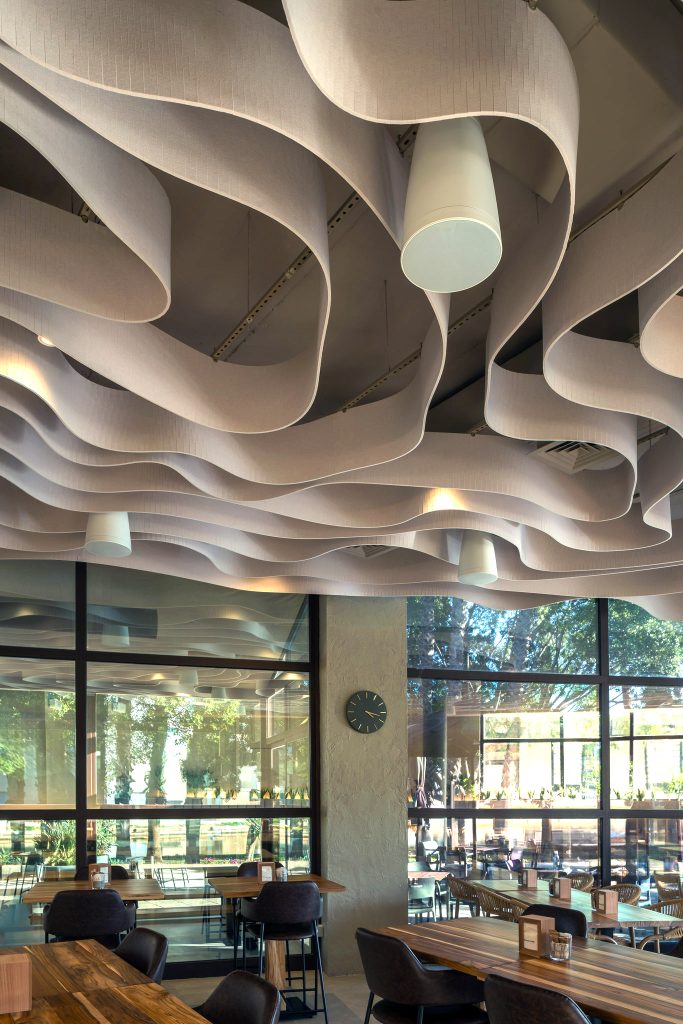
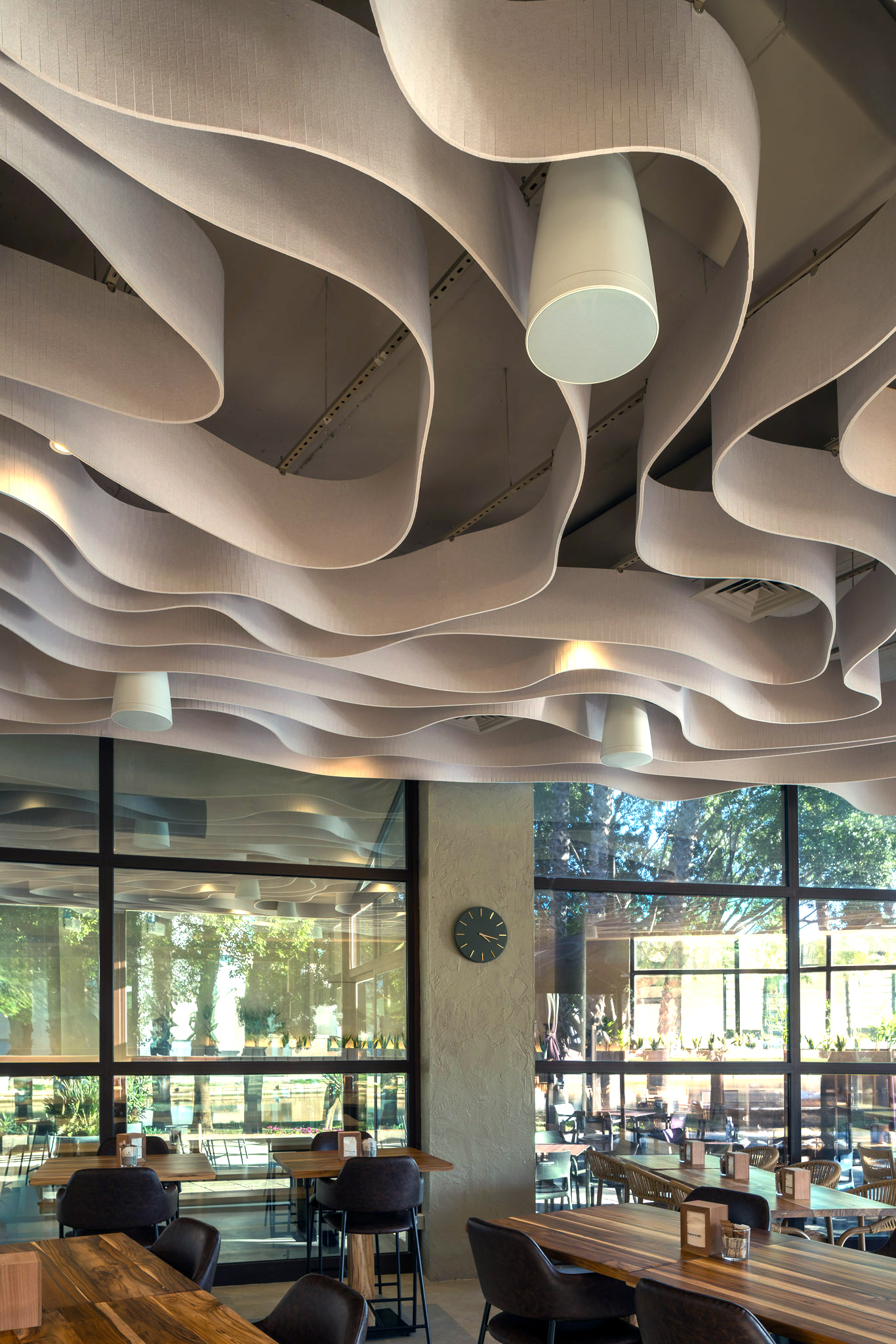
Its properties allow for working with different geometries, machining processes, and design solutions while maintaining a high level of definition. This makes RTF a particularly suitable material for applications where acoustics are integrated into the architectural project and the visual finish is as important as its technical function.
With 75% recycled material, RTF combines high acoustic performance, stability, durability, and surface quality. It’s a material designed to meet the demands of contemporary architecture and interior design, where technical performance, precision, and design are integral to a single solution.
Material properties
High density
Compact and stable structure
Homogeneity
Greater uniformity of surface and color
Precision
Greater definition of edges, cuts and geometries
Stability
Greater resistance to deformation during handling
Finish
Less presence of loose fibers
Acoustic performance
High sound absorption capacity
Technical specifications
Recycled content
75% certified post-consumer recycled content
Surface density
9 mm: 1.5 kg/m²
12 mm: 2.4 kg/m²
Acoustic absorption
9 mm: αw 0.30 – 0.90
ASTM NRC: 0.45 – 0.85
Thermal conductivity
0.040 W/(m·K)
Thermal resistance
0.621 m²·K/W
Reaction to fire
B-s1,d0